


By Justin Woolich, Specialist Motorcycle Engineer
Ride of a lifetime. Must-do American road trips. Bucket list rides. Hands down, the best roads for motorcycles in America. They’re the top rides for seriously scenic views, and hairpin turns. And everyone agrees, from the high-performance Suzuki boys to the stars-and-stripes Harley low riders.
What they may not tell you is how their bike sucked on the ride. How it stuttered when it slowed into the turn, and how it hesitated when they pulled out. But the truth is that sometimes the ride of a lifetime on the bike of a lifetime doesn’t turn out as advertised.
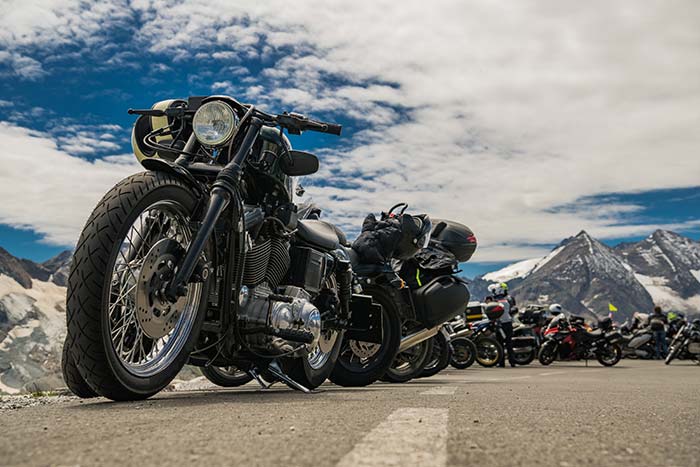
Woolich is Designed Specifically for Racetrack Performance
Woolich Racing is the top choice for professional motorcycle racers. Our ECU flashing allows you to tune with more precision across more engine systems. Woolich Racing’s precision tuning, especially tuning that removes limiters and adjusts air-fuel ratios, is designed for track use only. We recommend you seek advice about emissions and other applicable local laws before removing the speed limiter and adjusting your air-fuel ratio if you intend to ride on the street.
Why Does Your Bike Suddenly Suck On Mountain Rides?
Your bike is pre-tuned by the manufacturer to be environmentally friendly and handle your daily ride. Legally, you must comply with all emissions and other local laws when riding on a public road. Unfortunately, this means your bike is pre-programmed to suck at altitude. Mountain motorbiking messes with the bike’s settings, and it stops performing at peak. Learn more about high-altitude motorcycle tuning here.
How This Impacts Your Ride
- Substantial reduction in oxygen in the air can make for a serious imbalance in air-fuel ratio (AFR).
- Depending on manufacturer settings and your lambda sensors, your bike may compensate well, overcompensate, or not compensate at all.
- Rough idle, unstable performance at low RPMs.
- Cold, moist air can increase problems substantially, so your bike may perform even worse in autumn or winter.
- Weak engine response, especially on hills.
- Jolty downhill rides.
- Rapid climbs and drops in altitude can create “jumpy” open/closed loop fuel management.
- Lag time in throttle response, bike running hot, jitters at low revs, loss of top end power, overheating/running hot, poor fuel economy.
Top American High-Altitude Motorcycle Routes
What are the best high-altitude rides in the USA? What is the level of oxygen in the air compared to sea level? How severe could the impact be on your bike’s performance?
Pikes Peak Highway, Colorado Rocky Mountains
Potential for Performance Problems: Severe
Oxygen Reduction: 40%
Length: 12.4 miles
Peaks at 14,115 feet
Known for: 156 hairpin turns in just 12 miles. Sharp inclines and declines and the altitude and air density make it unsuitable for most carburetted engines. While bikes are now banned from the Pikes Peak Hill Climb, you can still do the ride for a $15 fee. The biggest issue here is the traffic. Cars do the hairpin turns at a snail’s pace. It’s also very chilly in the cooler months. The views are spectacular, especially above the tree line, but choose your timing carefully.
Alpine Loop Scenic Byway, Utah Wasatch Range
Potential for Performance Problems: Severe
Oxygen Reduction: 40%
Length: 20 – 63 miles
Peaks at 8,000 to 14,000 feet (depending on route)
Known for: Ghost towns, canyons and caves, incredible views and some twisty turns on gravel. This loop is not a ride for the faint-hearted – which means fewer tourists. Some of the best spots on the loop, the Cinnamon and Engineer Mountain Pass roads, are rated 4WD only and not recommended for bikes – but that’s obviously your call.
Trail Ridge Road, Colorado Rocky Mountains
Potential for Performance Problems: Severe
Oxygen Reduction: 35-40%
Length: 48 miles
Peaks at 12,138 feet
Known for: Hairpin turns, rapid climbs in altitude, 360-degree views, Colorado River, lakes, canyons, elk and other wildlife. Closed in winter. May be closed in fire season. Check access before travelling.
Million Dollar Highway, Colorado San Juan Mountains
Potential for Performance Problems: Severe
Oxygen Reduction: 35%
Length: 25 miles
Peaks at 11,018 feet
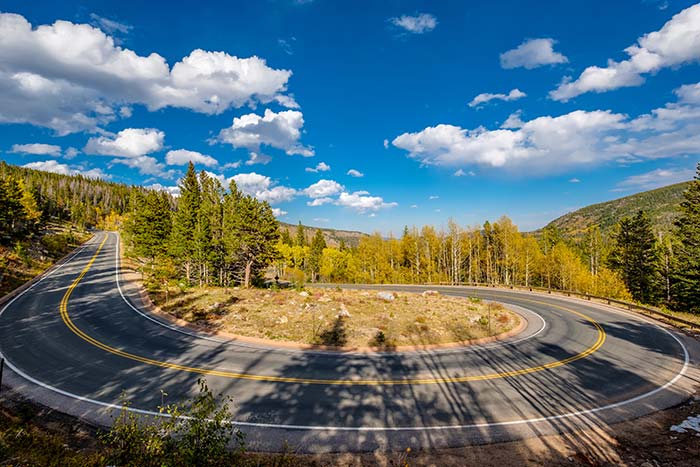
Known for: Lots of switchbacks and stretches of road with no guardrails and steep drop-offs – aka America’s most dangerous highway! Choose spring, early fall and summer to take on this road. Breathtaking 360-degree views of mountains and valleys, quaint townships, hot springs, waterfalls, and cave walks are all along the way.
Beartooth Highway, Absaroka Range, Montana/Wyoming
Potential for Performance Problems: Severe
Oxygen Reduction: 35% (may be higher in colder weather)
Length: 54 miles
Peaks at 10,947 feet
Known for: 30 peaks of rugged Rocky Mountain landscape including 360-degree views of rocky outcrops, creeks and townships. Beartooth Highway is open from late May to October, weather permitting. It can still be surprisingly chilly in June and July, and you may experience snowbanks on your ride. Check the conditions before heading out. Take your rain gear, take your winter gear.
Mirror Lake Scenic Byway, Uinta Mountains, Utah/Wyoming
Potential for Performance Problems: Severe
Oxygen Reduction: 35%
Length: 42 miles
Peaks at 11,000 feet
Known for: Panoramic views of the mountains and river basins as well as the spectacular Mirror Lake. Plenty of deer, antelope and moose to spot – sometimes on the road, so take care. Popular for colorful foliage in fall but also subject to late fall storms. Ride passes are cheap ($12) and there are plenty of places to stay, swim or ski. Generally, the climb is gradual and steady, making it suitable for less powerful bikes. Check conditions before setting out as it will close if snowfall is too dense.
Tioga Pass Road, Sierra Nevada, California
Potential for Performance Problems: High
Oxygen Reduction: 25-30%
Length: 70 miles
Peaks at 9,945 feet
Known for: Yosemite rock formations, views of lakes, meadows and Yosemite National Park. Opens from late May (sometimes late June) but may close at short notice if weather is rough. The biggest problem with this ride is the traffic. Being a tourist destination, you’re unlikely to get the open road to yourself. Consider a dawn visit.
Sonora Pass Road, Sierra Nevada, California
Potential for Performance Problems: High
Oxygen Reduction: 25-30%
Length: 29 miles
Peaks at 9,628 feet
Known for: Fewer tourists, more switchbacks, 26% grades. If Tioga is the go-to for Yosemite tourists, Sonora is the go-to for Yosemite riders. Sonora is too steep for RVs and 18-wheelers and too “scary” for tourists. It’s a dangerous ride, with rock slips, blind spots, hairpins and narrow passes, but the reward is a proper mountain road, complete with spectacular views. Not recommended for bikes that don’t fare well at altitude.
Mount Washington Auto Road, New Hampshire White Mountains
Potential for Performance Problems: Medium-High (due to constant, rapid incline)
Oxygen Reduction: 10-15%
Length: 7.6 miles
Peaks at 6,288 feet
Known for: Craggy landscapes and steep inclines. You’ll gain a staggering 4,000 feet in elevation in just 7 miles, making it unsuitable for motorcycles that can’t handle altitude. Still, the road is not as steep as the entry fee – $35 per bike and $20 per passenger. It’s one of America’s oldest man-made tourist attractions – and attract tourists it does. By the busload. In fact, there are busloads of tourists being ferried up and down Mount Washington Auto Road from before dawn to after dusk. Choose your visit time carefully!
Planning Your Great American Ride
Plan to fully maintain your bike before hitting the road, but also consider optimising your bike’s performance for altitude and temperature at your destination. If you’re journeying cross country and spending time on highways, consider Woolich Autotune to keep your bike at peak performance – on the peaks and on the straights, too.